Americano
A double shot with hot water added. The simplest drink on any espresso menu and the one most often made badly, usually because the water is boiling.
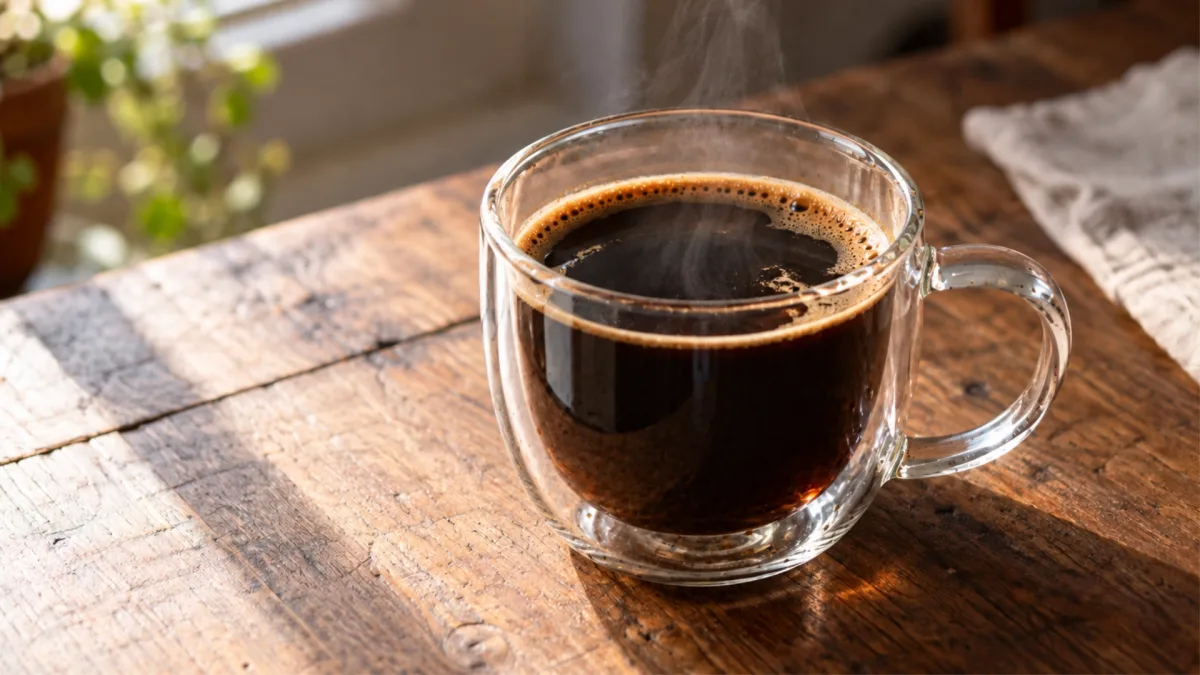
At a glance
- Espresso : water
- 1:4
- Active time
- 2 min
- Total time
- 3 min
- Makes
- 1 cup
- Serve
- Hot, black
- Kit
- Espresso machine
Ingredients
Note: Start at 1:4 and adjust from there. Some people go to 1:6 for a mug-sized drink; below about 1:3 it stops being an americano and becomes a slightly loose espresso.
Method
-
Pull a double
Eighteen grams in, 36 g out, straight into the cup you will drink from.
-
Let the water cool slightly
Water from a machine's hot tap is usually around 95°C and often hotter. Let it sit for thirty seconds, or draw it into a cold jug first.
Boiling water poured onto espresso scalds it and strips the aromatics, and it is the single most common reason an americano tastes flat and papery.
-
Pour the water onto the shot
Add about 150 g, poured gently down the side of the cup rather than straight into the middle.
The crema will break up. That is expected in an americano, and it is the difference between this and a long black, where the water goes in first.
Why this works
The americano is dilution rather than extraction. The coffee was brewed to its proper point as a shot and then lengthened, which means it tastes like that shot with the volume turned down, not like a longer brew. That makes it far more forgiving than a lungo, where the extra water goes through the coffee and keeps extracting.
Temperature is where most americanos fail. An espresso leaves the group at roughly 70°C in the cup. Pour 95°C water onto it and the volatile aromatics, which are the things that make coffee smell like coffee, are driven off within seconds. Around 85°C keeps them and still gives a drink hot enough to be pleasant.
The order changes the drink more than it should. Water onto espresso breaks the crema and mixes everything immediately, giving a uniform, slightly flat-looking cup. Espresso onto water leaves the crema largely intact on top, which looks better and gives a different first mouthful. Neither is wrong; they are simply different drinks with different names.
The origin story, that American soldiers in Italy during the Second World War watered down espresso to approximate the coffee they were used to, is widely repeated and plausible but poorly documented. The name is certainly Italian and certainly means American, and it was not originally a compliment.
Variations
- Long black: water in the cup first, then the shot on top, with the crema preserved.
- Iced americano: a double shot over a full glass of ice, then cold water.
- Red eye: a shot added to drip coffee rather than to water.
Made it?
Ratings are the most useful thing you can leave. They tell me which recipes need another pass.
5.0 average from 1 rating
Questions
What is the right americano ratio?
Start at one part espresso to four parts water, so a 36 g double with about 150 g of water. Push to 1:6 for a larger mug. Much below 1:3 and you have a loose espresso rather than an americano.
Americano vs long black: is there a real difference?
The ingredients are identical; the order is not. A long black puts the water in first and pours the shot on top, which keeps the crema intact and gives a slightly more aromatic first sip. An americano pours water onto the shot and breaks it.
Why does my americano taste flat?
Almost always water that is too hot. A machine hot tap runs at 95°C or more, which drives off the aromatics on contact. Let it cool for half a minute, or pour it through a cold jug first.
Is an americano just weak coffee?
It is diluted, not weakly brewed, and that is a real distinction. The coffee was extracted properly and then lengthened, so it keeps the character of the shot. A 1:4 americano also lands close to filter coffee in strength.